Rust solo survival in 2026 as Blooprint turns 14 days of a lone wipe into a five-hour Apex Survivor movie
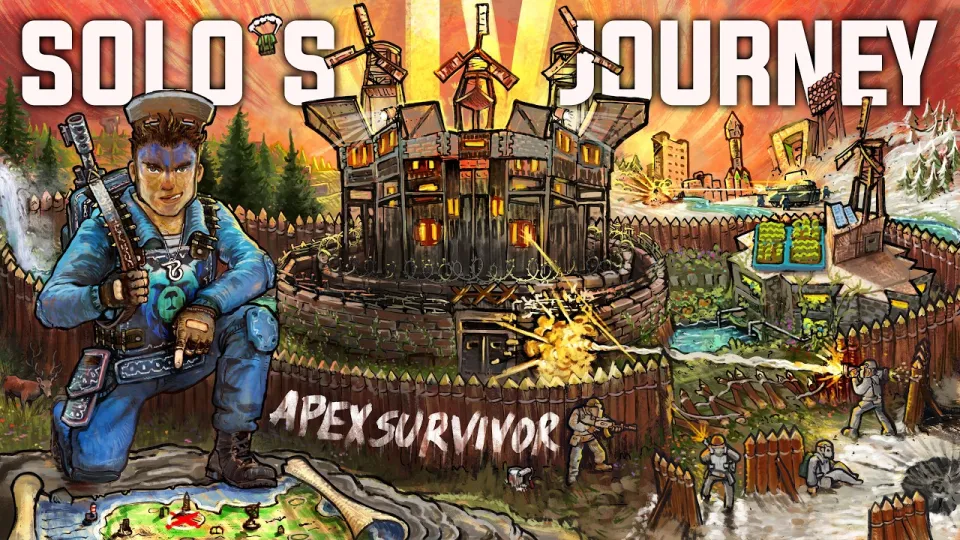
Video: Rust - A Solo's Journey IV: Apex Survivor (Movie)
Want articles like this for your own video to promote it on YouTube and Google? Order them through the Telegram bot @sat_sit_bot. The bot writes and publishes the articles itself (with your YouTube video embedded) on popular topical websites (no ads). Your first 50 articles are free.
· based on the channel Blooprint
Rust solo survival means running a full wipe without a clan, and Blooprint's "A Solo's Journey IV: Apex Survivor" is the clearest recent example of how far that can be pushed: 14 days alone on a server, cut into a single movie of roughly 4 hours 50 minutes. The film premiered on 12 September 2026 and doubles as a 2.5-million-subscriber milestone project, with a companion Solo's Journey progress tracker that maps any timestamp in the video to the checklist state of the run at that moment.
What the Apex Survivor movie actually covers
Apex Survivor is a long-form solo Rust documentary rather than a highlight reel, and its structure reflects that. The movie is split into an introduction, twelve numbered chapters and a closing segment, so a viewer can treat it as a series of episodes inside one file.
- Introduction and Chapter 1 open the wipe and establish the solo start: no team, no handouts, everything earned.
- Chapters 2 through 6 cover the early-to-mid wipe grind that defines solo play: base placement, farming loops, monument control and the first real PvP contacts.
- Chapters 7 through 11 push into the late-wipe phase, where a solo has to deal with groups, raids and the logistics of holding ground alone.
- Chapter 12 and the ending close the story, tying the run back to the checklist that the companion site tracks.
The scope is the point. Blooprint states that filming and editing the movie took well over 300 hours, which is why the channel treats a release like this as a rare event rather than a weekly upload.
Why solo Rust is a different game from group play
Solo Rust is a resource-management problem first and a shooter second, because every farm, every raid and every recovery has to be done by one player. A group can split duties — one member farms, one builds, one scouts, one defends — while a solo player has to sequence all of it and accept that any lost fight costs time that cannot be borrowed from a teammate.
That shows up in how experienced solo players structure a wipe:
- Secure a base location early and keep it cheap to rebuild; a starter that can be replaced in one farming session beats a fortress that takes a day to restore.
- Farm in short, repeatable loops near the base instead of long expeditions, so a death costs minutes rather than an hour.
- Use monuments and events like Oil Rig and the Cargo Ship as scheduled income, not as spontaneous adventures — go in with a plan to leave.
- Treat every fight as optional. A solo who wins a 1v3 still has to carry the loot home alone.
- Bank progress constantly: components, scrap and blueprints are worth more than gear you might drop.
A 14-day wipe amplifies all of this. Long wipes reward consistency over aggression, and the players who last are the ones who keep rebuilding after bad nights rather than the ones who win the biggest single fight.
The checklist system and how to follow the run
The Solo's Journey tracker is the most useful viewing tool attached to the movie. Instead of guessing how far along the run is, a viewer enters a timestamp on solosjourneytracker.com and immediately sees the checklist progress at that point — what had been built, farmed or completed by then.
That matters because a five-hour video compresses two weeks of real time. A base that looks modest in Chapter 3 may be the foundation for everything in Chapter 9, and the tracker makes that continuity visible without rewatching. For anyone studying solo Rust as a discipline rather than watching for entertainment, the checklist is effectively a public record of how a lone player allocates time across a wipe.
Common questions viewers raise about long solo runs
Long solo movies tend to trigger the same debates, and Apex Survivor is no exception. The recurring themes in viewer discussion are worth addressing directly.
Is a five-hour runtime actually watchable? Yes, in parts. The chapter structure exists precisely so the movie can be consumed in sittings, and the timestamp tracker means a viewer can jump back in without losing the thread. Many people treat it as background viewing across several days.
Does a solo run require a specific base design? No single design is mandatory, but unconventional layouts draw attention. Compact, low-profile bases with redundant loot storage tend to survive longer than ambitious builds, because a solo cannot defend a large footprint alone.
How much of the run is PvP versus farming? A realistic 14-day solo wipe is mostly preparation. Fights are the punctuation, not the text — the movie's pacing reflects that, which is why it reads as a story rather than a kill compilation.
What separates a good solo player from a lucky one? Recovery speed. Anyone can get a good start; the players who finish a long wipe are the ones who rebuild a base and re-gear within a session after being raided.
Useful links
- Solo's Journey tracker — enter a timestamp and see the checklist progress for the run.
- Blooprint vinyl figure on Youtooz — limited 2.5M subscriber merch, available only until 27 October 2026.
- Solo's Journey mousepads and playmats — available only until 3 January 2027.
- Hires Studio — animated intro for the movie.
- Veys — thumbnail artwork.
Final thoughts on Apex Survivor
Apex Survivor works because it treats solo Rust as a endurance discipline rather than a highlight format: 14 days, one player, and a structure that lets a five-hour cut stay coherent. The 300-plus hours of production behind it are visible in the pacing, and the chapter breakdown plus the timestamp tracker make it genuinely navigable. As a study of how a lone player survives a long wipe, it is one of the more complete records available, and the channel Blooprint deserves credit for building the tracking tool alongside the film. If you want to follow along properly, open the Solo's Journey tracker before you press play and check your progress as the run unfolds.
Key takeaways
- Blooprint survived 14 days of solo Rust in one wipe and released the result as a single movie, Apex Survivor, on 12 September 2026.
- The final cut runs about 4 hours 50 minutes across 12 numbered chapters plus an intro and an ending segment.
- Blooprint reports well over 300 hours of filming and editing behind the movie, made to mark 2.5 million subscribers.
- A companion site, solosjourneytracker.com, lets viewers enter a timestamp and see the checklist progress at that point of the run.
- The video is the fourth entry in the Solo's Journey series, following the same lone-player format on official Rust servers.
Source: Rust - A Solo's Journey IV: Apex Survivor (Movie) · Markdown version
Questions & answers
How long is Blooprint's Apex Survivor movie?
The movie runs about 4 hours 50 minutes and is divided into an introduction, twelve numbered chapters and a closing segment. That structure lets viewers watch it across several sittings instead of in one go, and the companion tracker helps them resume without losing context.
What is solosjourneytracker.com for?
It is a companion site built specifically for the movie. You enter a timestamp from the video and it shows the checklist progress of the run at that exact point, so you can see what had been built, farmed or completed by then.
Is a 14-day solo Rust wipe realistic for an average player?
It is demanding but achievable with the right habits. The key is consistency: cheap rebuildable bases, short farming loops, treating fights as optional and banking components rather than carrying gear you might lose.
Do I need to know the earlier Solo's Journey videos to watch this one?
No. Apex Survivor is a self-contained story of one wipe, from the solo start through the late-wipe raids to the ending. Watching the earlier entries adds context to the series format but is not required to follow the run.